File Locker
A production-ready encrypted file storage and streaming system built from scratch using Go, Docker, and AES-256 encryption.
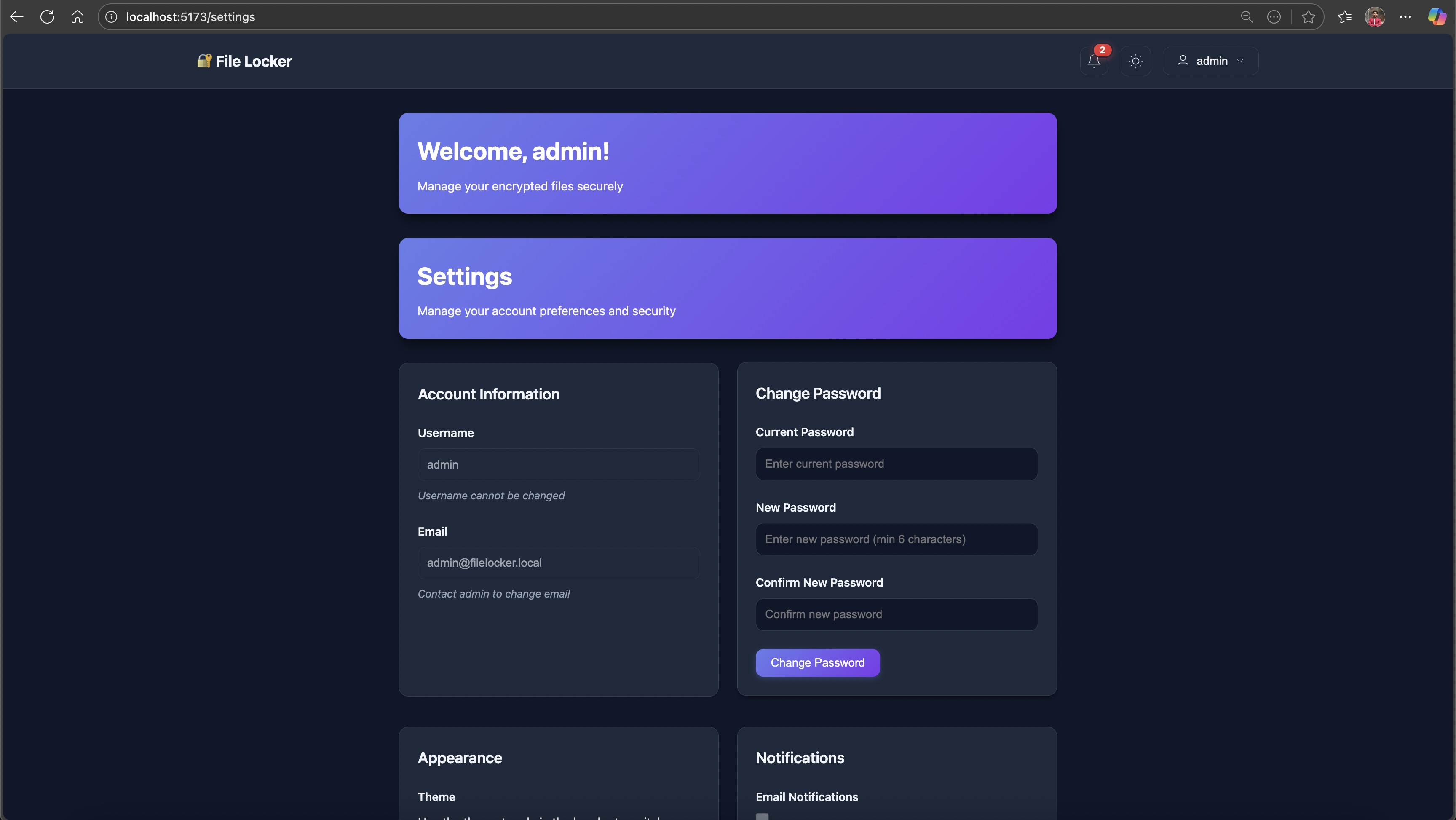
The Pitch
I wanted a Google Drive alternative, but one where I owned the encryption keys.
File Locker is a self-hosted platform I built to store files securely. It's not just a wrapper around an S3 bucket; it encrypts everything at rest using AES-256, supports video streaming with seeking (which is hard with encryption!), and has a full CLI for automation.
It's currently running live on my Raspberry Pi.
Tech Stack
- Backend: Go (Chi router), PostgreSQL (Metadata), Redis (Sessions), MinIO (Object Storage)
- Frontend: Preact (Lightweight React), Vite, TailwindCSS
- Security: AES-256-GCM (Files), AES-CTR (Streaming), JWT, Argon2
- DevOps: Docker Compose, Multi-Arch Builds (ARM64/AMD64)
The Coolest Features
1. Encrypted Video Streaming (with Seek!)
This was the hardest technical challenge. You can't just encrypt a video file and expect it to stream.
- The Problem: If a user jumps to minute 5:00, the player requests a specific byte range. But encryption changes byte alignment.
The Solution: I implemented AES-CTR mode for streaming. I calculate the exact block offset based on the requested byte range, adjust the IV (Initialization Vector), and decrypt just* that chunk on the fly.
2. "No-Trust" Storage
Even if someone steals the physical hard drive from my Pi, they get nothing.
Files are encrypted before* they touch the disk.
- Metadata (names, types) is stored separately in Postgres.
- Keys are managed via a secure envelope pattern.
3. The CLI Tool
I love the terminal, so I built a Go CLI with 38 commands. It mimics the API perfectly.
fl upload path/to/file(Drag-and-drop terminal upload)fl ls(Lists files like a native directory)fl share(Generates temporary access links)
Product Preview
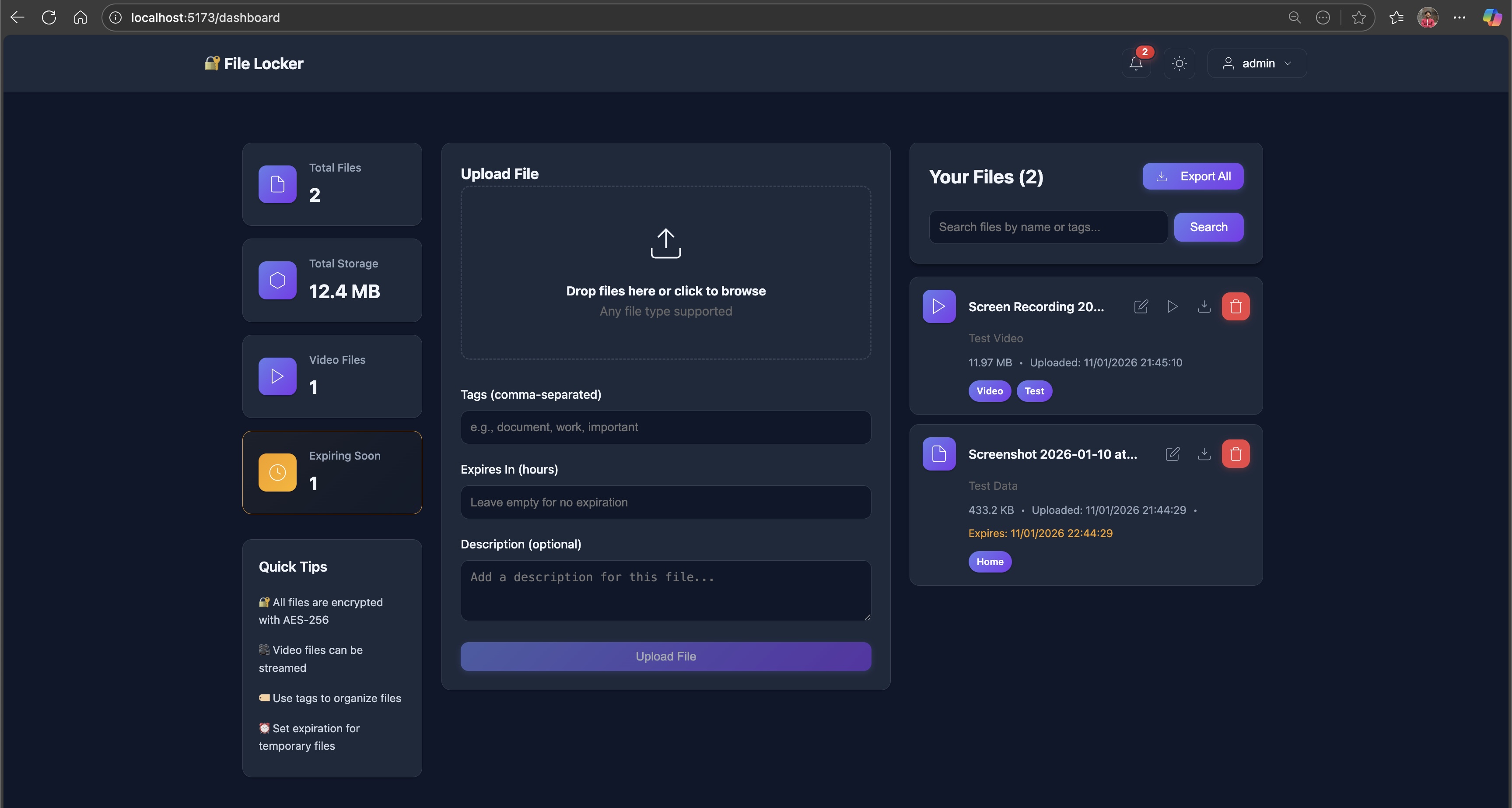
Modern web interface with file management and uploads
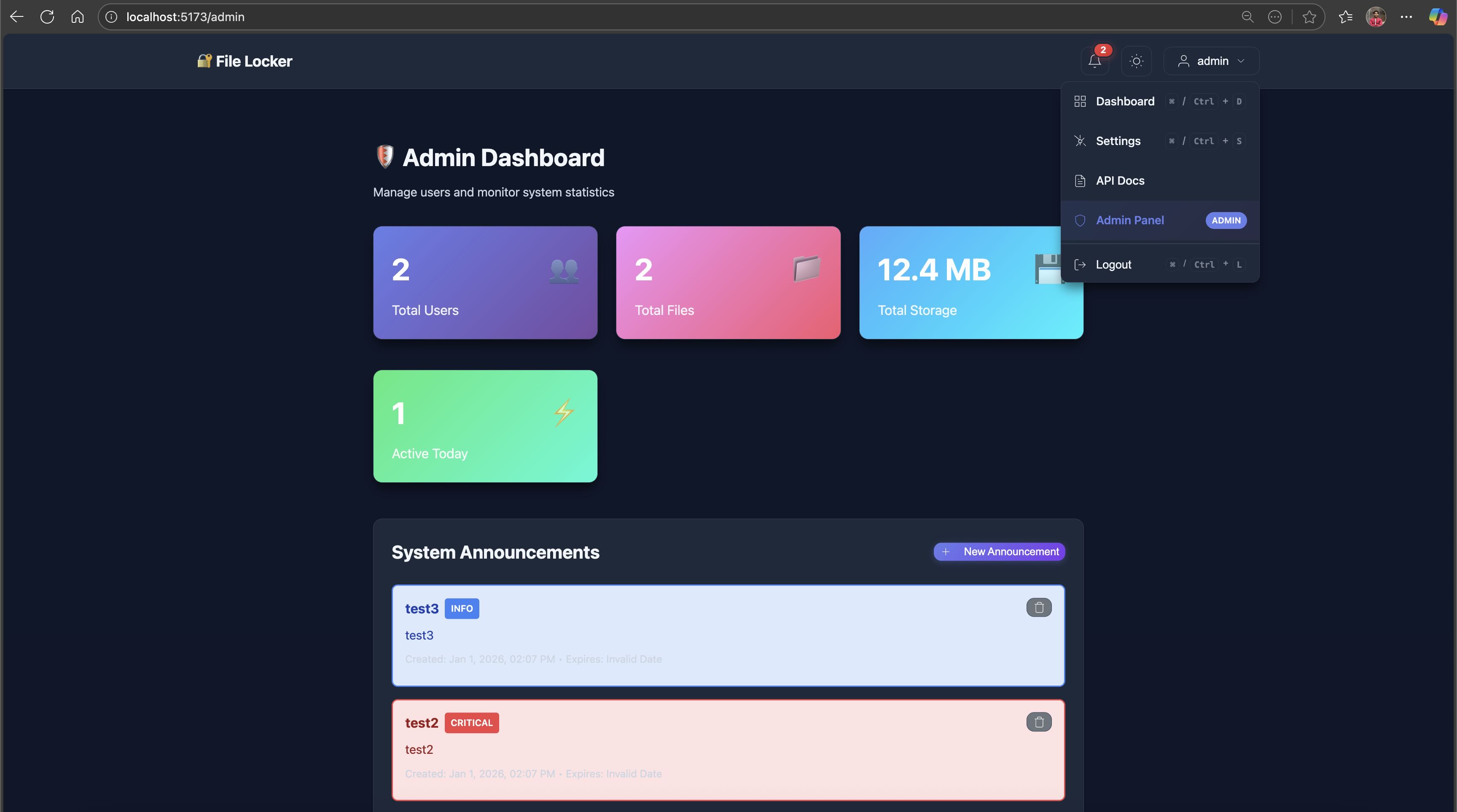
System stats, user management, and audit logs
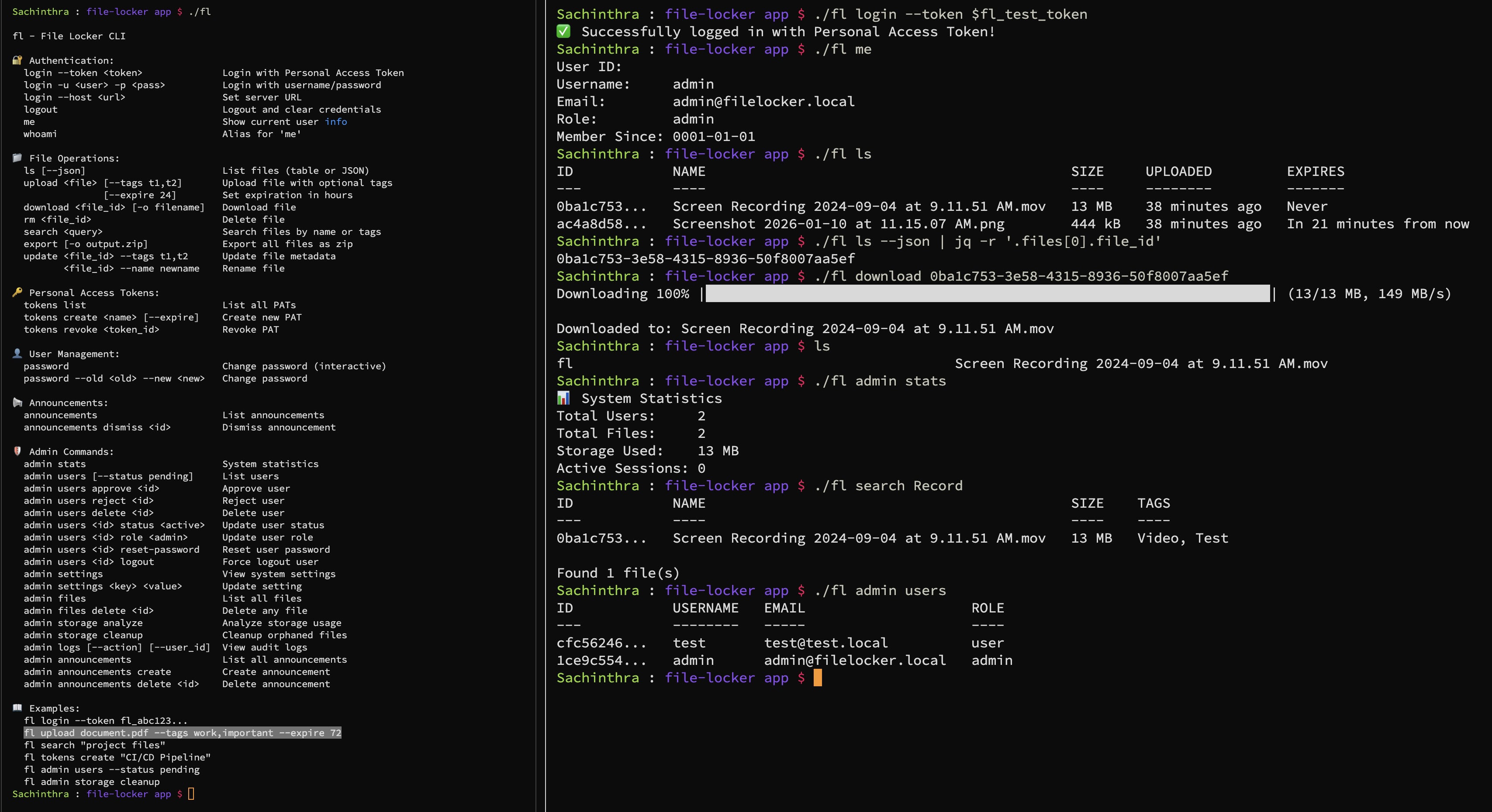
Automation-ready CLI with progress tracking
What I Built
Backend (Go)
- REST API with 32+ endpoints
- Multipart file uploads with streaming
- Automatic encryption pipeline
- Secure downloads with on-the-fly decryption
- Video streaming with HTTP Range support
- PostgreSQL full-text search
Authentication & Security
- JWT-based sessions with Redis caching
- Personal Access Tokens for API/CLI
- Role-based access control
- Password hashing with Bcrypt
- Session expiry + force logout
Admin Dashboard
- User approval & role management
- File moderation & deletion
- Storage analysis & cleanup
- Audit logs
- System announcements
Web Interface
- Drag-and-drop uploads
- Real-time progress
- File tagging & search
- Expiring files
- In-browser video player
- Dark / light mode
CLI Tool
- 38 commands (100% API coverage)
- Upload, download, search, export
- Token management
- Admin tools
- Script-friendly output & exit codes
Architecture Overview
It's a microservices-style setup running via Docker Compose:
- Nginx: Handles SSL termination and routes traffic.
- Go API: The brain. Handles auth, encryption logic, and database queries.
- MinIO: The dumb storage layer. It only sees encrypted blobs.
- Redis: Caches user sessions and download tokens for speed.
Service Flow:
Frontend (Nginx) → Go API → PostgreSQL
                     ↓
                   MinIO
                     ↓
                   Redis
Encryption Pipeline:
Upload → Encrypt (AES-256-GCM) → Store (MinIO)
                ↓
         Metadata (PostgreSQL)
Streaming Pipeline:
Range Request → Decrypt (AES-256-CTR) → Stream
Key Takeaways
- Go is perfect for IO: Streaming encrypted data with
io.Readerandio.Writerinterfaces in Go is incredibly memory efficient. - State management: Managing upload progress and resumable uploads required careful frontend-backend sync.
- Cross-Platform Builds: Since I code on a Mac (ARM64) and deploy to a Pi (Linux ARM64), setting up
docker buildxpipelines was essential.
Why This Project Matters
This project demonstrates:
- Backend engineering: Go APIs, database design, and efficient data handling
- Security implementation: AES encryption, JWT authentication, and RBAC
- DevOps practices: Docker containerization, multi-service orchestration, and ARM64 deployment
- System design: Scalable architecture with proper separation of concerns
- Real-world production experience: Running 24/7 on my home network
File Locker isn't just a demo app — it's a real system I use daily to solve real storage and streaming needs.